The numbers back up the strain. The accommodation and food services sector posted a 4.2% quits rate in 2025, according to the Bureau of Labor Statistics, and hotels alone reported 65% facing staffing shortages with 71% unable to fill open roles. HR automation won't fix every staffing headache, but it's changing how hospitality businesses handle the repetitive work that eats up HR's day, freeing teams to focus on culture and guest experience instead of paperwork.
This article covers the trends reshaping hospitality HR automation, the real benefits worth pursuing, and how to implement it without losing the human touch your industry depends on.
Key Takeaways
- HR automation streamlines recruiting, onboarding, scheduling, and compliance for high-turnover, seasonal hospitality operations
- Faster hiring workflows, lower compliance risk, and consistent onboarding across properties
- AI recruiting, mobile-first tools, and predictive analytics help teams hire faster and staff with better foresight
- Automation works best with human oversight, supporting HR judgment rather than replacing it
What Is HR Automation, and Why Does It Matter in Hospitality?
HR automation uses software and AI to handle repetitive HR tasks: recruiting, onboarding, scheduling, compliance tracking, and answering routine employee questions. Instead of a manager manually re-explaining PTO policy for the tenth time this month, a system handles it instantly.
Hospitality is uniquely suited to this kind of automation because of how the industry operates:
- 24/7, multi-shift operations that never pause for HR's business hours
- High turnover that keeps recruiting and onboarding in constant motion
- Seasonal hiring surges — the National Restaurant Association projected 525,000 seasonal restaurant jobs for summer 2024 alone
- Multiple properties or locations, each needing consistent policies and training
- A frontline, largely deskless workforce that rarely sits at a computer during a shift
HR's role in hospitality goes beyond paperwork. It covers recruitment, training, compliance, and culture-building — all of which directly shape the guest experience. A stressed, undertrained employee shows up in every guest interaction. A well-supported one delivers better service without extra oversight.
A SHRM survey found 60% of HR leaders spend more time on administration than strategic work, with under 15% of time going to strategy. In hospitality, constant hiring, multi-shift coverage, and multi-location consistency push that admin load even higher — which is exactly where automation pays off.

Top Trends Shaping Hospitality HR Automation
AI-Powered Recruiting for High-Volume Hiring
Seasonal hiring surges demand recruiting that can scale fast. Chipotle's Ava Cado tool, launched for its 2025 "Burrito Season" hiring push, uses conversational AI to answer candidate questions, collect information, and schedule interviews. The results: applications went from start to hire in four days on average, application completion jumped from roughly 50% to over 85%, and applicant flow nearly doubled.
That's one operator's case, not an industry-wide benchmark. Still, it shows what happens when AI removes friction from the front end of hiring.
Mobile-First Tools for Frontline Staff
Hospitality workers aren't sitting at desks. Tools built for self-service access — through platforms employees already use, like Microsoft Teams or Slack — matter more here than in office-based industries. Hospitality Technology's 2024 study of professionals covering 10,000+ properties found 62% viewed employee-facing technology as empowering, though 42% still saw friction from training gaps or clunky interfaces.
Automated, Standardized Onboarding
Cornell research notes that half of hourly workers leave within 120 days of starting a new job — a sobering stat for any operator managing multiple properties. Standardized digital onboarding, delivered through a centralized learning platform, ensures every new hire gets the same training regardless of which manager is on shift or which location they're joining.
Predictive Analytics for Staffing Risk
Deloitte's 2025 restaurant framework combines scheduling, performance, training, and tenure data to flag attrition patterns before they become resignations. This is still an emerging use case, not a proven industry standard. The logic is simple: connect the scheduling, performance, and tenure data you already have, and attrition patterns surface early.
AI Chatbots for Employee Questions
Real-time chat tools that answer routine HR questions — benefits, policy, general requests — reduce the constant interruptions managers face during a shift. The best versions escalate anything complex or personal to an actual HR professional, rather than trying to force every question into a script.
Adoption is already moving. A 2023 Deloitte survey of 120 US hotel GMs found 50% had adopted new technology and 43% had automated repetitive tasks. Those figures cover operations broadly, not HR alone, but they point the same way: hospitality teams are automating routine work and freeing managers for the floor.

Key Benefits of HR Automation for Hospitality Businesses
Hospitality operators use HR automation to hire faster, stay compliant, and protect the guest experience.
- Faster hiring workflows. Automated recruiting removes bottlenecks in interview scheduling and applications, critical when front desk or kitchen roles need filling yesterday, not next week.
- Consistent onboarding across locations. Every new hire follows the same digital learning path, so quality doesn't depend on which manager is training that week.
- More time for relationship-building. Automation absorbs repetitive admin and gives HR and managers more time to engage staff in an industry where turnover is a constant fight.
- Reduced compliance risk. Multi-property teams juggle labor laws, certifications, and scheduling rules by jurisdiction; automated tracking and centralized policy libraries catch gaps early. SHRM's tools alone span all 50 states and 400+ topics.
- Stronger link to guest experience. Cornell research found a one-point rise on a five-point hotel reputation scale made guests 13.5% more likely to book, and a 1% reputation increase correlated with RevPAR gains up to 1.42%. Engaged, well-trained staff show up in those reviews.
- Better staffing decisions. Real-time scheduling, labor cost, and turnover data help leaders forecast needs instead of reacting to shortages. With wages at a median 36.5% of sales for full-service restaurants (National Restaurant Association), staffing accuracy is a financial lever.

Common Challenges When Automating Hospitality HR
Automation isn't plug-and-play, especially in an industry built on personal service.
- Losing the human touch. Hospitality culture runs on relationships. Over-automating employee interactions risks leaving staff feeling processed instead of valued.
- Staff and manager resistance. Hospitality Technology research found 54% of survey respondents cited a shortage of skilled technology expertise on their teams, and roughly four in ten hotel GMs listed reskilling as a top workforce challenge.
- Integration headaches. Connecting HR automation with existing payroll, scheduling, and POS systems across multiple properties needs deliberate planning. Fragmented systems that don't share data in real time create more confusion, not less.
Plan for each risk during rollout so automation supports your people instead of sidelining them.
How to Successfully Implement HR Automation in Your Hospitality Business
Successful implementation starts with a clear plan, not a software purchase:
- Audit your manual processes first. Identify which recruiting, onboarding, or scheduling tasks eat the most time. These are your best automation candidates.
- Choose tools that scale with you. A single boutique hotel and a 15-property restaurant group have different needs. Pick technology built to flex, not a one-size-fits-all system.
- Invest in change management. Staff need training and buy-in, not just a new login. Roll out changes at a pace people can absorb.
- Bring in HR expertise that understands hospitality. This is where a lot of businesses stumble. Generic HR software without hospitality context misses the industry's compliance complexity and culture demands.

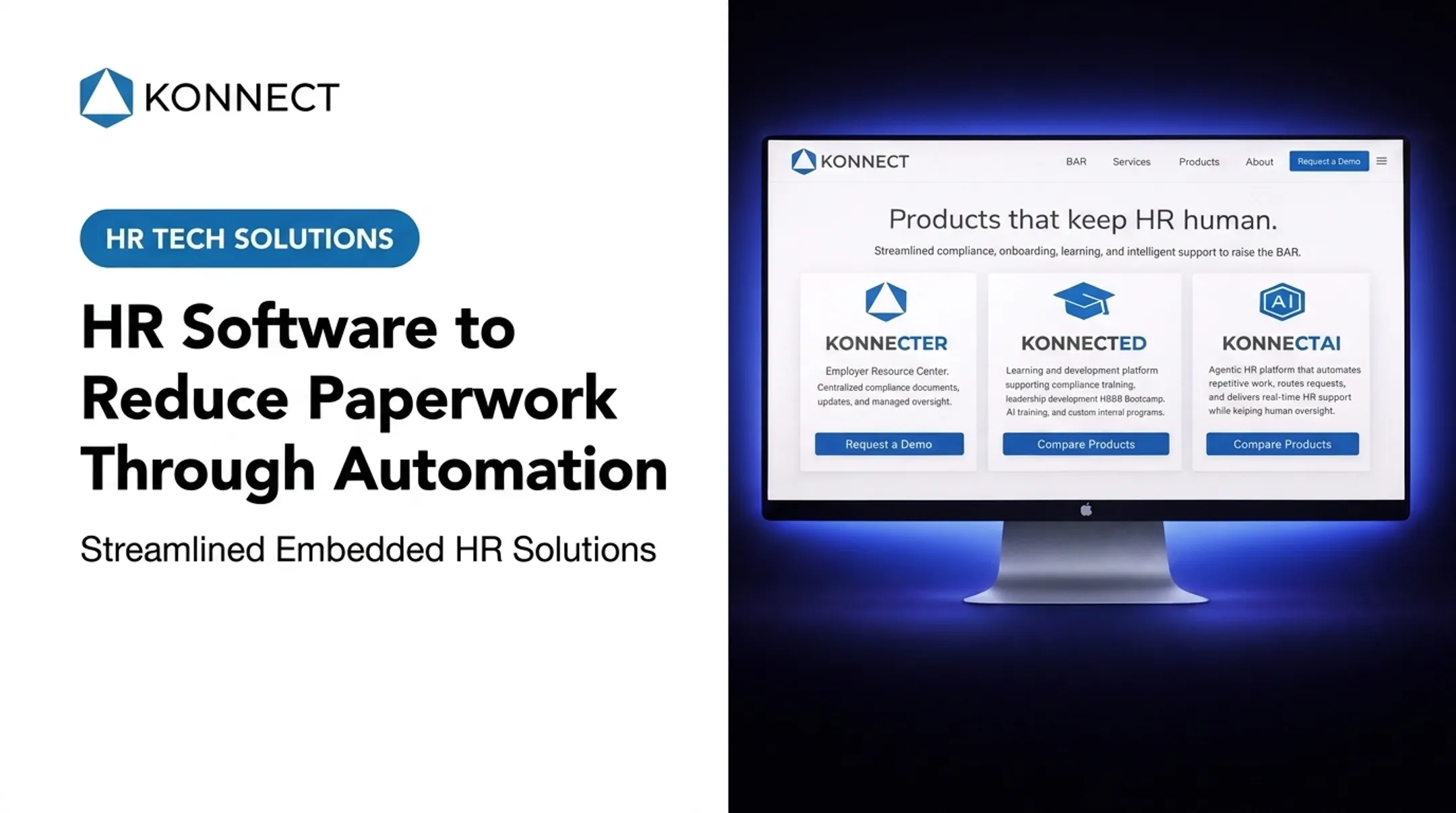
This is the gap Konnect's Center of Excellence model is built to fill. It combines specialists in compliance, recruiting, and learning with KonnectAi, an AI-powered HR assistant.
KonnectAi answers employee questions, automates routine requests, and integrates with tools like Microsoft Teams, Slack, Workday, and ADP. Complex issues escalate to an actual HR professional.
Founder Jamie Viramontes brings direct hospitality experience to that model, having served as VP of Human Resources at Chipotle before founding Konnect. His background across food & beverage, retail, and healthcare informs Konnect's approach: automate what's repetitive, but keep people at the center of HR decisions. That idea sits behind the company's tagline: Keeping HR Human.
Frequently Asked Questions
What is the role of HR in the hospitality industry?
Hospitality HR manages recruitment, onboarding, training, compliance, and employee engagement for a workforce defined by high turnover and 24/7, guest-facing operations. It directly shapes the service quality guests experience.
What are the biggest benefits of automating HR in hospitality?
Faster hiring, more consistent onboarding across locations, and reduced compliance risk top the list. Automation also frees up HR and managers' time for relationship-building and retention efforts.
Will HR automation replace hospitality HR teams?
No. Automation handles repetitive tasks like answering routine questions or processing paperwork, but it augments HR professionals rather than replacing them. Complex, personal, or culture-related issues still need a human.
What HR processes should hospitality businesses automate first?
Start with recruiting, onboarding, and scheduling — these are the highest-volume, most repetitive processes and typically offer the fastest visible impact.
How does HR automation improve employee retention in hospitality?
By freeing HR and managers from admin work, they have more time for coaching and engagement. Consistent onboarding also reduces early confusion, which is a common driver of early exits.
Is HR automation affordable for small hospitality businesses?
Yes. Scalable platforms exist for organizations as small as 10 employees, with tiered pricing that grows alongside the business. Partnering with an HR firm that offers both advisory support and automation tools can also ease the cost and complexity of adoption.