Introduction
Walk into most HR departments and you'll find a performance management policy sitting in a shared drive somewhere. It has goal-setting timelines, review templates, maybe even a rating scale. On paper, it looks complete.
In practice, it collapses into a once-a-year checkbox exercise because nobody trained the managers who actually have to run it.
The data backs this up. Only 14% of employees strongly agree that their performance reviews inspire them to improve, according to Gallup's research on the truth about performance reviews.
Gallup's own analysts point to a specific root cause: many managers were simply never trained to evaluate performance, deliver feedback, or build real development plans.
This guide breaks down what performance management training actually is, why it matters more than most HR teams realize, and how to build a program that sticks. It also covers the common roadblocks that derail implementation.
Key Takeaways
- Untrained managers turn even well-designed performance systems into ineffective annual paperwork
- Frequent, meaningful feedback drives engagement far more than annual reviews ever will
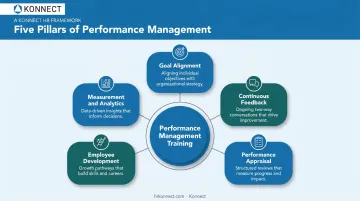
- Five pillars form the backbone of effective training: goal alignment, feedback, appraisal, development, and analytics
- Scenario-based practice and ongoing coaching beat one-time workshops for changing manager behavior
- Small businesses can access CHRO-level training expertise without building an internal L&D team
What Is Performance Management Training?
Performance management training is the ongoing skill-building process that equips managers to set goals, deliver feedback, evaluate performance fairly, and support employee growth. It differs from performance appraisal training, which typically covers a single event: filling out the review form once a year.
That distinction matters more than it sounds:
- Performance appraisal training teaches a task, completed once a year
- Performance management training builds a capability, used every week
The industry is shifting away from annual-only reviews toward continuous performance conversations. Yet the shift hasn't fully caught on in practice. Many organizations still treat performance management as a once-a-year task focused on reward allocation rather than a year-round system of coaching and feedback. That gap between intention and execution is exactly why manager training has become non-negotiable.
The Mindset Shift Managers Need
The hardest part of this training is the identity shift, not the frameworks.
Managers have to move from being judges who evaluate performance after the fact to coaches who actively develop it in real time. That's a different skill set, one built on curiosity and dialogue rather than scorekeeping.
Why Performance Management Training Matters
Untrained managers don't just deliver mediocre reviews. They erode engagement, retention, and legal protection, often without anyone noticing until the damage shows up in turnover numbers.
Engagement Rises With Real Feedback
Gallup's research found that 80% of employees who received meaningful feedback in the previous week were fully engaged at work, according to Gallup's analysis of feedback and performance. Employees who got daily feedback instead of annual feedback were 3.6 times more likely to say they felt motivated to do outstanding work.

Feedback frequency matters, but the real lesson here is about quality. Managers need training to deliver feedback that's specific, strengths-focused, and forward-looking, not vague praise or criticism dropped once a year.
Retention Depends on Proactive Conversations
Poor management is consistently one of the biggest drivers of voluntary turnover. Gallup surveyed over 700 employees who had recently left a job voluntarily and found that 42% said their manager or organization could have done something to prevent their departure.
Even more telling, 45% said no manager or leader had proactively discussed their satisfaction, performance, or future in the three months before they left, per Gallup's research on preventable turnover.
Trained managers who run regular, honest check-ins catch these conversations before an employee starts browsing job boards.
Productivity and Legal Protection
Structured goal-setting and regular check-ins cut down on wasted effort. When managers translate business priorities into individual goals consistently, teams stop working at cross-purposes.
There's also a compliance angle. Objective, job-related evaluation criteria applied consistently across employees represent a recognized risk-reduction practice. Untrained managers who evaluate inconsistently, or let personal bias creep into ratings, create exposure that documentation alone can't fix.
Jamie Viramontes, founder of Konnect, built his career on this insight after serving as a former CHRO at organizations including Forever 21 and UCI Health. The difference between a compliance exercise and a genuine culture shift almost always comes down to one thing: whether managers were actually trained to lead the process, not just handed a form to fill out.
The 5 Pillars of Effective Performance Management Training
High-impact training programs aren't random collections of topics. They're built around five interconnected pillars that cover the full employee performance lifecycle, from setting expectations to measuring results.
Goal Alignment
Managers need training on translating business objectives into individual SMART goals: specific, measurable, achievable, relevant, and time-bound. Employees should understand exactly how their daily work ladders up to organizational success, not just what their to-do list looks like this week.
Continuous Feedback
Training here focuses on real-time, specific feedback instead of saving every comment for an annual review. Managers learn to flag issues early and reinforce good work as it happens, not months later when the moment has passed.
Effective programs teach managers to:
- Hold brief weekly check-ins instead of waiting for formal review cycles
- Tie feedback to specific, observable behaviors rather than general impressions
- Deliver recognition within 24-48 hours of strong performance
Performance Appraisal
This pillar covers structured, bias-reduced evaluation techniques and proper documentation. Managers learn to apply consistent criteria across their team and document decisions in a way that's fair and defensible.
Employee Development
Appraisal results should connect directly to individualized growth plans. Training helps managers identify skill gaps and map out realistic career pathways, rather than leaving development to chance.
Measurement and Analytics
Managers learn to use data, KPIs, and dashboards to inform decisions instead of relying purely on gut feel. This adds objectivity to conversations that can otherwise feel subjective or personal.
Konnect's Advanced and Elite service tiers build these five pillars directly into embedded HR support, pairing manager training with tools like the KonnectED LMS, powered by Absorb, to reinforce skills long after the initial rollout.
How to Train Managers on Performance Management
Building a program that actually changes behavior takes more than a single workshop. Follow this sequence:
- Assess current skill gaps and calibration levels. Before designing any curriculum, find out where managers actually struggle. Generic training wastes time solving problems that don't exist.
- Teach foundational frameworks. SMART goal-setting and structured feedback models like Situation-Behavior-Impact give managers a repeatable structure they can apply immediately.
- Use scenario-based learning and role-play. Practicing a tough conversation, like addressing underperformance, in a low-stakes setting builds confidence before managers face the real thing.
- Provide practical tools. Review templates, one-on-one meeting guides, and feedback checklists reinforce consistent application long after the training session ends. Centralizing these resources in a learning management system, such as Konnect's KonnectED platform, makes it easier for managers to revisit materials and track completion.
- Reinforce through ongoing coaching. A single training event rarely changes behavior. Studies on leadership training design show that spaced practice sessions using multiple formats produce stronger skill transfer than one-off, self-paced content.
- Track training effectiveness. Measure whether managers are rating consistently and monitor downstream engagement or retention metrics to confirm the training delivers results.
Managers grow the same way their teams do: through practice, feedback, and reinforcement over time.
Types of Performance Management Training Formats
Not every organization needs the same delivery model. The right format depends on team size, distribution, and how much reinforcement managers need.
- Live, instructor-led workshops: Cohort-based sessions allow peer learning and immediate practice, making them particularly effective for behavior change around difficult conversations.
- Online, self-paced courses: These scale efficiently for distributed or remote teams, but they require reinforcement (coaching, follow-up check-ins) to translate into actual behavior change on the job.
- Blended coaching programs: Combining structured content with ongoing one-on-one or group coaching sustains skill application well after the initial session ends.
Konnect's KonnectED learning platform reflects this blended philosophy directly, built on the idea that "development is not an event, it is a system." It pairs on-demand course content with assigned learning paths and progress tracking, so training doesn't stop the moment a session ends.
Common Challenges in Performance Management Training (and How to Overcome Them)
Even well-designed programs run into predictable friction. Here's how to plan around it.
Manager Buy-In and Time Constraints
Managers already feel stretched thin. Embedding training into existing workflows, like structuring one-on-ones around a feedback framework, works better than treating training as a separate initiative competing for calendar space.
Inconsistent Application and Bias Across Teams
Different managers rating similar performance differently is one of the fastest ways to lose employee trust. Standardized frameworks and calibration sessions help align how ratings get applied across teams before inconsistency becomes a pattern.
Limited In-House HR Expertise
Many small and mid-sized businesses simply don't have a dedicated L&D function to design and deliver a structured training program. This is where a scalable HR partner can close the gap.
Konnect's Center of Excellence model gives organizations access to CHRO-level performance management expertise, built by leaders with direct experience at companies like Forever 21, Chipotle, and UCI Health. This access comes without the cost of building an internal team from scratch.

Instead of assigning a generalist HR contact, clients get routed to specialists in the exact discipline they need. You can see how the tiers work on Konnect's services page.
Frequently Asked Questions
What are the 5 pillars of performance management?
The five pillars are goal alignment, continuous feedback, performance appraisal, employee development, and measurement and analytics. Together they cover the full lifecycle from setting expectations to tracking results.
How do you train managers on performance management?
Start by assessing current skill gaps, then teach core frameworks like SMART goals and structured feedback models. Reinforce with scenario-based practice and ongoing coaching rather than a single training event.
What is the difference between performance management and a performance appraisal?
Performance management is the continuous, year-round process of goal-setting, feedback, and development. A performance appraisal is one formal evaluation event that happens within that larger process.
How often should performance management training be conducted?
Initial training should be followed by regular refreshers, ideally tied to onboarding new managers and periodic skill check-ins. Treat it as an ongoing system woven into regular manager development.
What are the 5 C's of performance management?
Clarity, Communication, Consistency, Coaching, and Collaboration make up this popular mnemonic. It's not an official industry framework, but it mirrors the same principles found in continuous performance management.
Can small businesses benefit from performance management training, or is it only for large enterprises?
Small businesses often benefit the most, since manager training scales down effectively even with just a few employees. Scalable outside support, like Konnect's model, makes expert-level training accessible without a large internal HR team.